
The Headliner: Daisy Tackett
“Maybe I don't make enough to cover my gas, but it is nice to get paid for your work.”

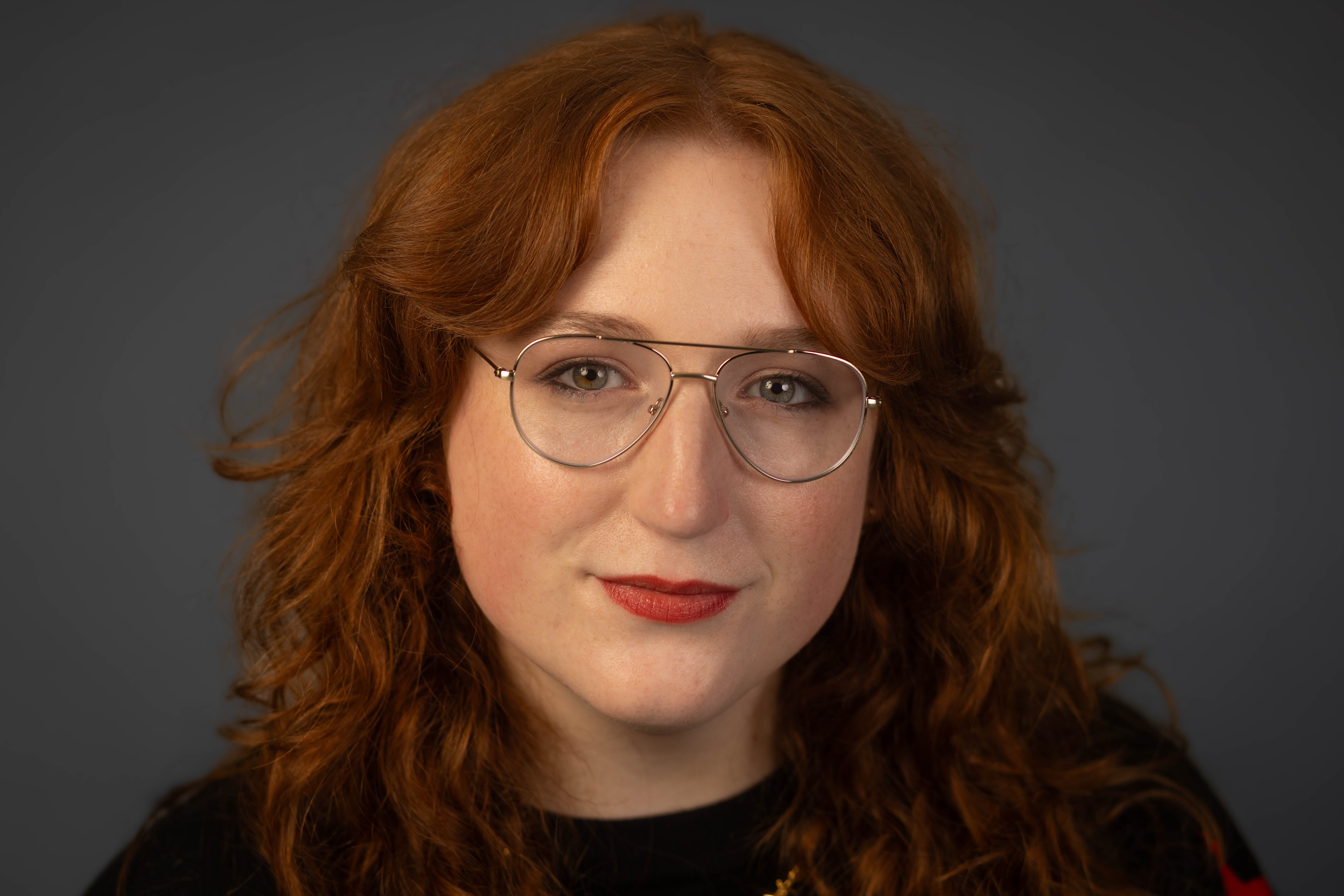
I first saw Daisy Tackett a few years ago; she was performing a set about rape. It’s not an easy topic by any means, but I watched Tackett tackle the subject with calmness, ease, and control. When the crowd got quiet, she used it to pace her comedic timing. When they gasped, she reminded them it was all jokes. And they were spectacular jokes, at that.
Based in Jacksonville, Florida, Tackett has been performing comedy since her senior year of college. Her general interest in comedy combined with a knack for talking too much in group therapy caused the comedian to try stand-up, and, since then, Tackett has won a number of Best of Jacksonville competitions. She also works as a producer for Don’t Tell Comedy and Worst Coast Comedy and enjoys bringing comedy to the people.
How would you describe your comedy?
It’s definitely, you know, kind of alternative, DIY; that would be my first instinct. I really hate doing comedy clubs and comedy club-adjacent things, so I try to be the antithesis of that. One of my friends once called me the most toxically masculine woman they know. I guess that would kind of fall into that. My biggest fans are, like, gay guys and frat guys, so I feel like I bring them together in some fashion.
Tell me about how you got into comedy.
I started when I was in college in New York. My roommate invited me to one of their friend’s comedy graduation shows. They were taking a class, and I was like, “Ok, cool.” I went. It was, like, eight guys doing Trump impressions, because this was 2018. And then, my roommate’s friend was really fantastic, and I was like, “Man, this seems like a really fun thing to do, and I feel like I could do a lot better than all these guys doing Trump impressions.”
At the same time, I was in a group therapy for sexual assault survivors. I had just finished a Title IX lawsuit against my original college, and I had a decent amount of money from that settlement. In group therapy, they were like, “We think you’re really funny, but you’re kind of taking up a lot of our time,” and it all kind of came together nicely to where I was like, “I’m going to take this class at Gotham Comedy Club, because also I know I need some structure to start something.” And it all kind of went from there.
After the first class, I left feeling really, really good about what I had written and what I prepared, and I was like, “Ok, maybe I’m good at this — good enough to keep going for a little bit.”
Your start in a group therapy setting makes a lot of sense; often, comedians talk about how they find humor in life-changing experiences. How much impact did that have on you pursuing comedy?
I remember a couple years before [my roommate’s friend’s show], like, my freshman year of college, I took this English class, and we had to do a presentation at the end of the year that was about our way of seeing. In that class, I remember I wrote a stand-up set and performed it as my class project. So, I think I always wanted to perform and do stuff like that, but I just didn’t have really the means or the opportunity to get started. … I think I needed to have both the push from my therapist and the group and a class at the same time to come together to make it something that I can really act on.
You once said that if you throw a joke out in casual conversation, and it plays well, you’ll go back and write it down to maybe say later. Do you still do that? I’d love to hear about your writing process a bit.
Yeah, I think that’s part of it; that’s probably smaller now. I’ve been having a hard time writing new stuff recently. And I don’t know if you remember — during Covid — Gary Gulman was posting these comedy tips, and there’s a couple that I’ve come back to when I’m trying to write. … So, that’s somewhere I kind of start. Another thing I’ve been doing a lot of is trying to add things onto existing bits. So, let’s say I have a joke that’s two minutes long or a minute and a half. I’m like, “Ok, how can I extend this even further? What else can I touch on in this big topic?” And I’m trying to get better at something that’s kind of one joke long for a prolonged period of time, like we’re just talking about this topic; I’m not going to dance around it.
It’s interesting that you’re looking to add to bits. I hear a lot of comedians say the opposite: that they need to cut down their jokes. Is that your norm?
Maybe I should go to my inspiration for this process. When you see a late-night set, right? Well, that’s five minutes, and it’s usually one extended joke for five minutes. And I have jokes that do that, but … I want to build up to a special or an album and get a full hour. … I’m trying to work in more crowd participation stuff, but not where I’m doing crowdwork necessarily. It’s more like if a topic I know works — if it’s a banger of a joke — then, I mean, I want to build on that and add more substance to it. I already feel like I have an economy of words, but when I write jokes, I’m very concise, so I have more space to build stuff out.
Do you feel like being concise comes from knowing exactly how you want to hammer in a joke, or is that just how you like bits to sound in general?
It’s how I prefer stuff to come out. I also think that I build in a lot of pauses with my jokes, and so, if there’s too many words and no laughing, then that’s kind of a bummer. So, I think adding in space for me to really lock eyes with someone in the crowd and make them giggle a little bit more or [adding] something in a joke that doesn’t have a lot of words in it is valuable.
What’s the comedy scene like in Florida? That’s a place people don’t consider often in the comedy conversation.
Each city is a little different. I mean, I like Gainesville. I like Tallahassee. I like Pensacola. Everywhere else: You can take it or leave it; it just really depends on who you’re working with. In Jacksonville, specifically, we have three distinct micro-scenes, and nobody likes to work with the people on the other side. There’s the DIY, alternative stuff. There’s the comedy club. And then, there’s kind of this other group of guys that are putting on shows, and it’s very… I don’t know, a lot of Florida comedy right now is white guys being like, “Why don’t white guys get a chance anymore?”
It is tight-knit when you find your people. … It’s just such a big state, and in New York, … there’s a couple big differences. In New York, if you do a bar show, you’re not getting paid, right? I’m getting paid for pretty much every comedy spot I do. But I’m also driving, you know, four hours to do 10 minutes, I don’t have as much stage time in my backyard as a lot of other people do, so I think there’s pluses and minuses. Maybe I don’t make enough to cover my gas, but it is nice to get paid for your work.
Florida’s just a weird place, and everyone wants to move to Austin from Florida; that’s the vibe. It’s very, “We want to be Austin.” A big reason for that is because Kam Patterson was from Orlando, and he went to Austin, and now he’s on SNL. And so, a lot of people in Florida think that’s the path that they can take.
With so many people in the comedy scene wanting to leave Florida, what’s made you stay?
I was trying to move last year, but I have a house that I purchased, so I’ve been trying to sell the house. … I’m here for a while because of that. … I try to perform out of town as much as humanly possible, whether it’s festivals or I just fly to New York for a week and do shows, or what have you. I’ve built a big enough community in comedy over eight years that, now, I can go to pretty much any city and spend the night on someone’s couch.
But I also think that Florida is a really great place to start doing comedy, and it’s a place to get better. Every audience is a wild card. In New York, by being in a certain neighborhood or being at a certain venue, what your crowd’s going to be [changes]. That does not exist in Florida. You might be in a more liberal neighborhood, but that doesn’t mean that there’s not going to be a 90-year-old woman wearing a MAGA hat in the second row; that happens sometimes. … You have to get better, and you have to learn how to make your jokes funny to everybody in the audience, not just the hypothetical audience in your mind that loves your jokes, so I do think that’s very valuable about Florida.
I wish that more comics, instead of being like, “I’ve done comedy in Florida for a year, I need to leave,” would embrace what makes Florida good and travel to other cities in Florida. There’s a big difference in doing Tallahassee versus Gainesville, even though they’re both college towns. There’s a big difference in Pensacola and Jacksonville, even though they’re both Navy towns. St. Augustine and Daytona are very different, even though they’re both on the beach. There’s huge differences in each city, but they’re still wild cards every time, so I think it’s important. That’s why I like staying here: At least it’s like a new challenge every single time I get on stage.
You also produce a handful of shows. How do you feel about producing versus performing?
I think producing is all so fun, because I’m able to make something, especially doing the stuff through Don’t Tell [Comedy]. I’m able to make a show that’s good, that has a big audience, that has a good audience, and I’m able to pay all the comics. I’m able to get paid as the producer. I’ve got great venues. It just feels way more community-based, and I think that’s really great versus performing. …
As a producer, I understand the challenges of booking lots of people that want headlining spots, but I’m also very acutely aware of how a lot of women don’t [ask]. I would say less women reach out to me for headlining spots than men. I always try to accommodate them, but I don’t feel the same way when I’m reaching out to producers in other cities, so it gives me an interesting perspective performing as a producer on other people’s shows. You learn what’s good about their shows. You learn what’s bad about their shows. You take those lessons home and try to implement them the best you can.
You said once that your favorite sound in comedy is that noise people make when a comedian touches on a heavy topic and it gut-punches them. As someone who often talks about your experience with rape and sexual assault, is that still true?
I mean, obviously, I would hope that everyone is uproariously laughing at every joke that I say. But, you know, I think the second best is if people really take a minute with it. Back to what I said about building in pauses: When I first started telling a lot of these jokes, that’s when I really was like, “Oh, I need to like build in a pause where I can stay quiet for 10 seconds,” because they’re processing, and then, finally, someone will break and start giggling, and then everyone will be on board. Recently, I haven’t been telling a lot of those jokes as much, because I’ve been hosting a lot, and that’s a real gamble to put in the host set. But when I’ve been working on headlining, that’s [the kind of] joke that I’ve been playing with its placement in sets. I used to do it at the very end, but then, if you lose them entirely, then that sucks — horrible way to get off stage. Sometimes, I did it in the middle, so then, I’d have to spend the rest of the time clawing them back, because you really don’t know how the audience is going to react. It’s such a personal joke that the way people react to it feels very personal, even though I know it’s not.
Have you ever had people just immediately start laughing at those jokes?
Yeah. Sometimes, people will laugh too fast, where I’m like, “Oh, they’re not laughing with me, they’re laughing at me.” But then, I’m like, “Well, maybe that’ll make other people feel comfortable to laugh with me instead of at me, you know?” I have kind of two different sets that have the rape stuff in them. There’s the buying the house stuff, and then I have kind of the original stuff that was the first jokes that I ever really wrote. And there’s a part where my rapist was the third-string long snapper on a terrible team — like, the worst position, backup to the backup to the backup — and I call him the “Rudy of Rape.” And I remember, one time, I told that joke, and a guy in the audience actually started chanting “Rudy,” and that was the first time that it ever happened, like from the movie [Rudy]. I was like, “That’s so bizarre,” but then, when people react weird ways to the joke, it almost makes me write new additions to the joke. …
I try to take people’s reactions to some stuff and incorporate it back into the set, because I also think it makes it feel more lived in. It makes it feel a little bit more like I’m here with you in this moment, where you could contribute to this set in some way.
What’s a joke that you love to tell that never really lands or that lands inconsistently?
The jokes I have that hit inconsistently are usually due to the audience more than the joke itself. I tell a couple jokes up top about growing up religious and making fun of Christian billboards, and older conservative audiences really hate it. Sometimes, I get a laugh out of it, but I can never know for sure with those audiences.
Anything else you’d like to say?
I mean, I think we gotta kill all the rapists in comedy. And if you book them, I won’t book you.
And that’s on the record.
Yes, perfect.
All of it but also that last part 🙏🤞🏻🙌